
Client ·Oct 2026 → ongoing
The Myracle Boutique
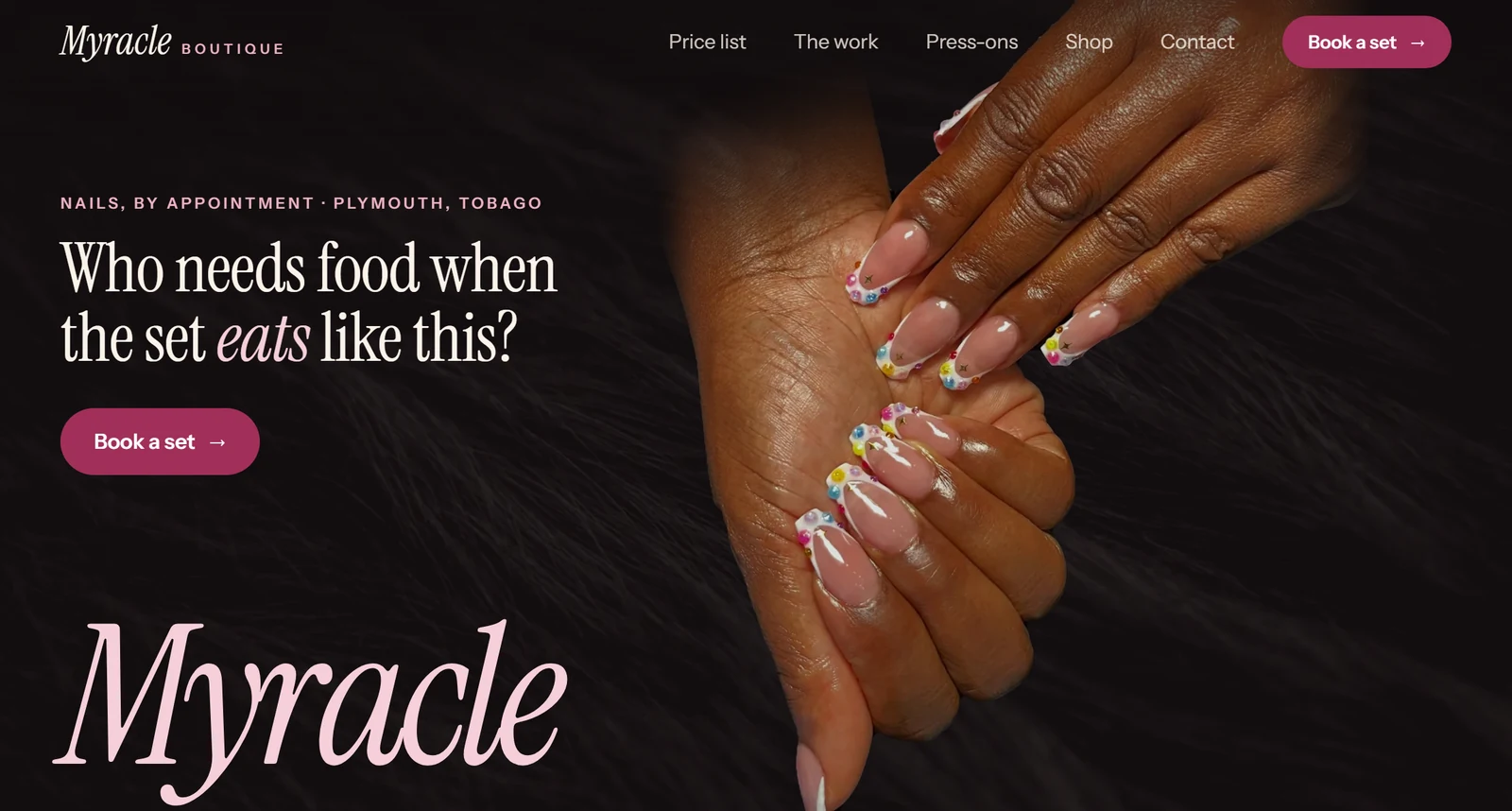
A home nail studio's website in Tobago, made from its own Instagram: its sets as the page, a booking that takes hands and toes as one appointment and offers only the times it fits, and an admin made for a phone on OPI's client admin kit, with the studio's shop and its books inside it. A draft, not yet launched.
- Timeframe
- Oct 2026 → ongoing
- Tags
- Beauty and wellness · sveltekit · bookings · cloudflare
- Credits
- Xern Mottley — Engineer
Where it started
The Myracle Boutique is a nail studio in Tobago, run from home by a certified cosmetologist: gel on natural nails, Gel-X and acrylic sets, manicures, pedicures and press-ons. Its customers reached it by call, text, WhatsApp or a message on Instagram.
On 6 October 2026 it asked OPI, through the scope builder on OPI's own site, for a site that says what the business does so that people get in touch. It would be worth it, it said, for more customers finding it and for looking professional. Photographs for the site, a logo, a web address: not yet, to all three.
So the first draft was built from what it already had, its Instagram, and went with the first reply on 15 October.
From her scope on 6 October to the twenty-first draft on 26 October: what landed, with its commits and its drafts. The first three days carry most of both.
What was done
That first draft was judged plain the same day, a template in all but name, and was taken apart: the sites a beauty brand is measured against, seven ways to improve, one direction. The studio became its two real grounds, a pink room and black fur, with her photographs as the page and her own captions as its headings.
All sixty of her photographs were read to choose the hands in the opening, and the chosen pair were cut out by a recipe that keeps every pixel hers. Her reels became film the scroll plays, her sets a hand dealt in four acts, and her price card a menu set out by the choice a client makes.
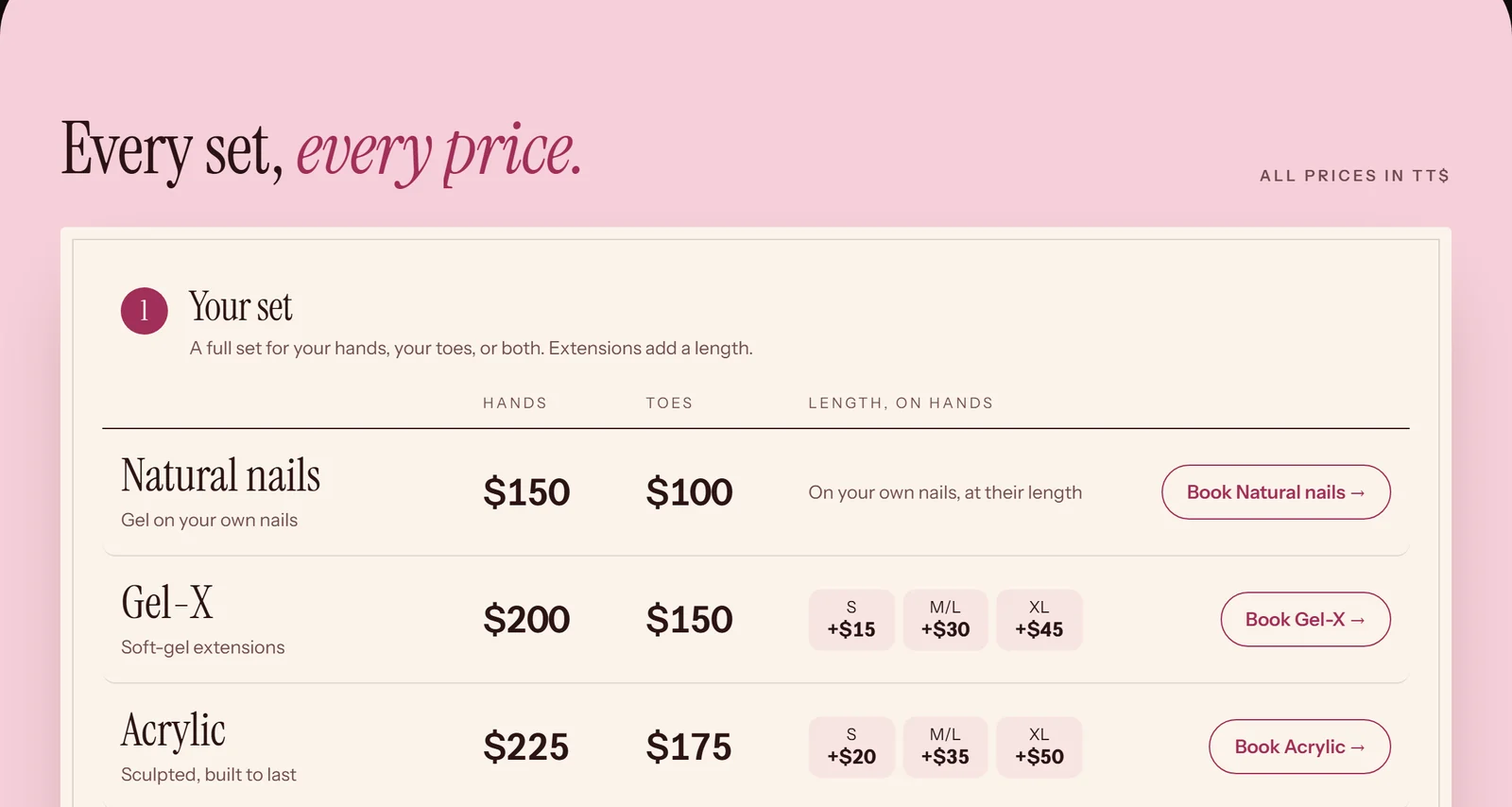
Her price list, set out by the choice a client makes: a set for hands, toes or both, by system, with a length's price on hands. Her own prices, as on her price card.
Her admin came next, built with this studio as the first client of OPI's client admin kit. Made for her phone, it is where she answers requests, keeps her week and time off, sets her prices and the site's words with a draft, a publish and a history, places her photographs, quotes press-on orders, writes the messages clients receive, and records what each booking came to.
What her admin runs, in its three groups, on OPI's client admin kit, built with this studio as its first client.
Her first notes asked for more goods: nail care kits, bought once or by subscription, with or without press-ons. That became a shop she runs herself. She adds a product with its photos and prices, and each order lands in her admin with the client's message already written.
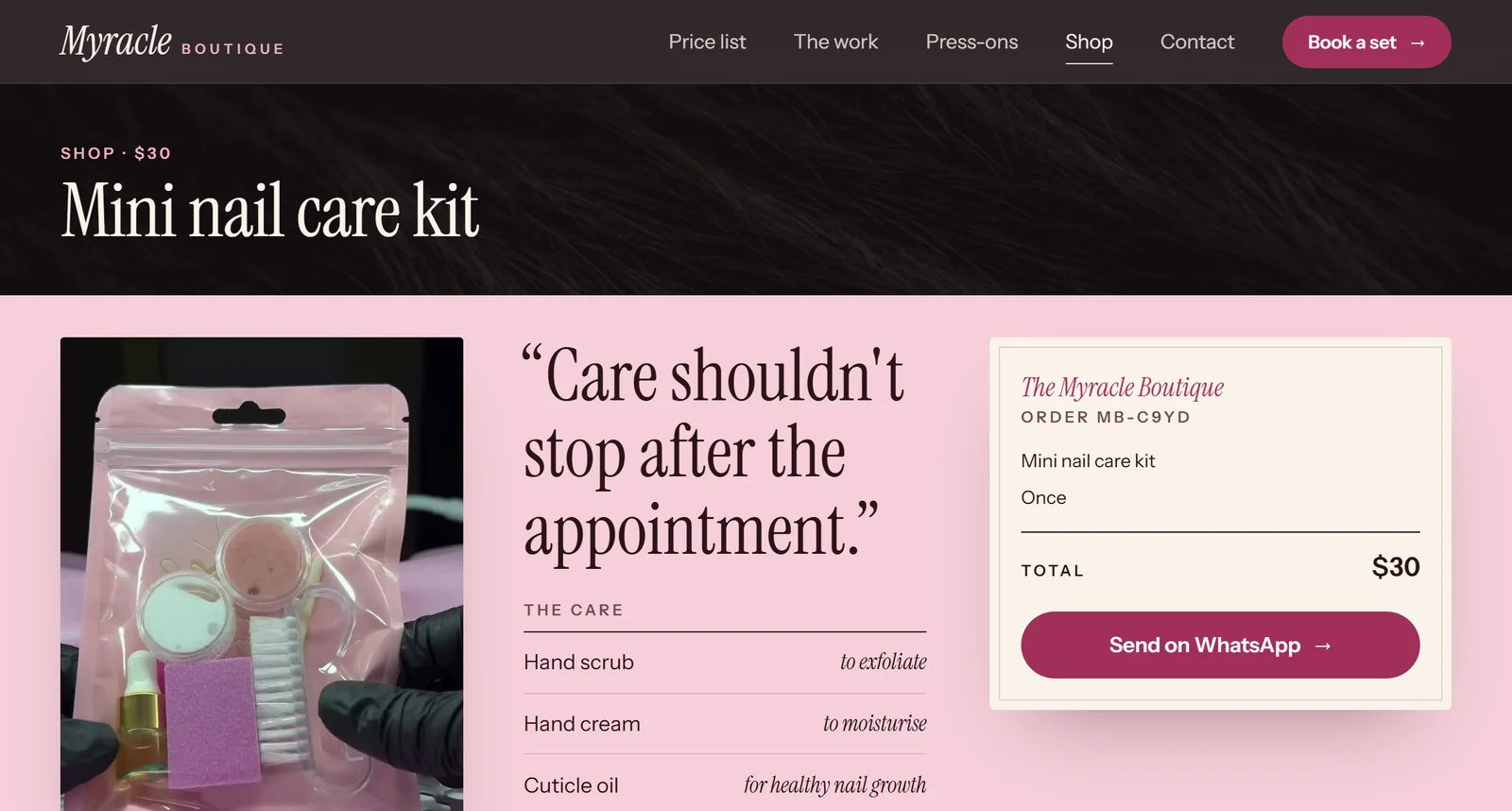
A product in her shop, with her photograph, her line and her price, and the order written up beside it, ready to send on WhatsApp.
The same kit now runs the admins of D'Weekendr, Noble Link and every client site since.
The decision that mattered
The booking is what the site is for, so it had to be exact. The first draft took one service at a time: hands or toes, never both. A nail appointment is a basket, as the booking systems salons already use treat it, and how long it takes is the sum of what is in it.
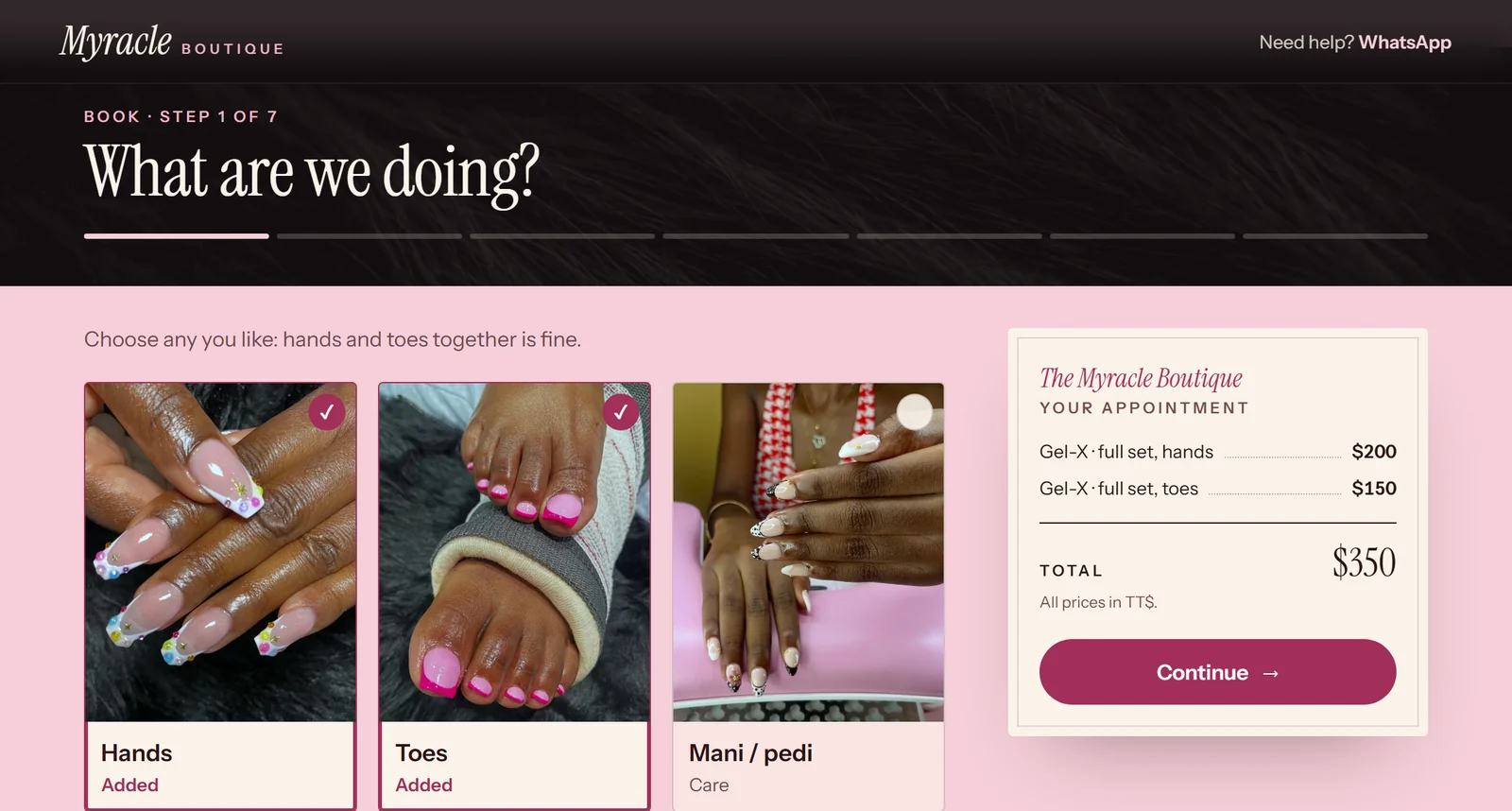
The booking's first step with hands and toes both chosen: her own work as the choices, and the receipt adding them up.
So hands and toes each take a system and a finish, and hands a length too, chosen from tiles of her own work; the total adds up as they are picked. A price she gives as from stays from, with the reason, and the question every technician asks, whether a set is on now, adds the soak-off before the end, so nothing is a surprise at the chair.
The times offered are her real free times, worked out from her week, her time off and how long each service takes, and only where the whole basket fits. A request is priced again from her list and its time checked again on the server, then waits in her admin for a confirm or another time.
A booking from the client's first tap to the owner's answer: a basket priced from her list, only the times the whole basket fits, a request priced and timed again on the server, and her reply from her admin.
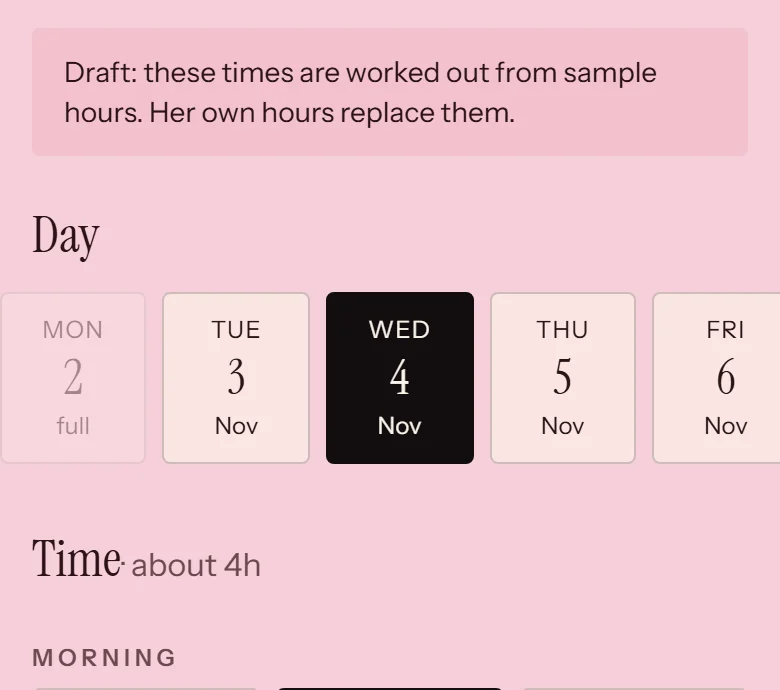
The time step on a phone: the draft's own note that its hours are samples, the days with a full one marked, and times for a basket of about four hours.
Until she gives her own hours and durations, the times run on samples, and the page says so in as many words. In her admin, each request then waits with the client's receipt, a choice of confirm or another time, and the card that records what the booking came to and what was paid.
Money was the second hard part. On 16 October the recommendation was to leave accounting out of the admins, which recorded money coming in and nothing else. It was overturned within the hour. The books of a studio this size are usually a pile of receipts with nothing tracked, and one place to run the whole business was what the admin was for.
The design went to three independent reviews before anything was built. The first found its tax lines wrong for a business this size, so tax became an optional layer that never blocks anything.
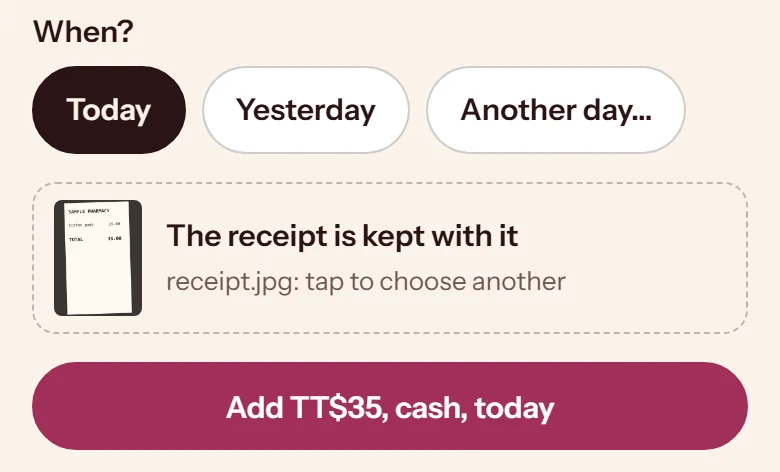
A cost added on a phone: the day, the receipt kept with it, and a button that says what goes in. The receipt here is a sample, on the local copy.
The second found that deleting a booking deleted its payments, so the kit changed before any client recorded real money: a payment is voided and stays on the record, and every change is logged. The third found the first run had not been drawn, and the first run is the pile of receipts.
The from prices came back here. A total given as from cannot go into the books, so a booking closes at what it came to, and her sales are read from that.
Money stayed a prototype on sample figures until 21 October. That day the site was called ready and the call was withdrawn within hours: the admin could take a booking and could not keep the books, and her goods were still press-ons alone. The handover was tabled, the shop and Money were built for real, and the books now run from her bookings, orders and payments, off until she turns them on.
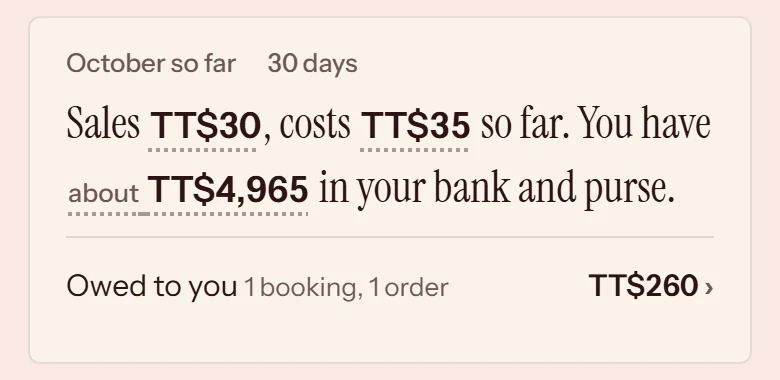
The month on a phone, on the local copy's sample figures: sales, costs, what is in the bank and purse, and what is owed to her.
The messages went the same way. A first sketch was thrown out as patch work, and the written design that replaced it drew 128 findings in review, 13 of them blockers. Its route through WhatsApp's business service also carried a running cost, so the plan left automatic messages to email. WhatsApp stays her own app, with each message written for her to send.
Her guide was the last review. Every task in it was walked by a script on a local copy before it was printed, and the walk caught what the reviews had not: Shop missing from the admin's More page, and an order's buttons running off a phone. It was then cut from 47 phone-sized pages to 25 of A4.
Where it stands
A draft, not launched, with no web address of its own yet. Twenty-one drafts have gone up since 15 October, the last on 26 October.
Her first notes came back on 16 October and were built the same day: a second number for calls, capitals made consistent, the site speaking as the studio rather than about her, and a softer palette she can preview before she chooses. Her booking policy followed and sits on the booking page in her words, and her contact form now reaches her admin.
On 26 October it was ready for her to try, on sample clients and bookings, with a sign-in card and a guide of 32 tasks. Her sign-off comes next, then a web address, her own hours and how long each service takes.
The captures here are from the site on this machine, with her photographs, her prices and the admin's sample figures.
Next — OPI Project Management →